No child, no mother, should ever be left without care.
ACT For Lebanon is joining forces with ASSAMEH Birth & Beyond, the organization that has kept Lebanon’s public maternity and pediatric wards alive since 2014, making sure that Lebanon’s most vulnerable mothers and newborns receive the care they deserve regardless of their ability to pay.
Why this cause matters
Every year, 70,000 babies are born in Lebanon. Nearly 9,000 of them arrive too soon, premature, fragile, and fighting from their very first breath. In 2024, that number fell, not because fewer babies were born, but because war and poverty are taking their toll before birth even happens.
Since 2014, ASSAMEH Birth & Beyond has worked alongside the Beirut Governmental Hospital Quarantina to make sure that when these babies arrive, care is waiting.
Abandoned newborns, victims of neglect and abuse, critically ill children with no family to speak for them, the hospital takes them all in. Over the years, it has treated more than 14,500 patients and handled 40,000 external consultations, becoming the national referral center for Lebanon’s most acute and medically complex pediatric cases. Not by choice, by necessity. Because for so many families, it is the only place that will not turn them away
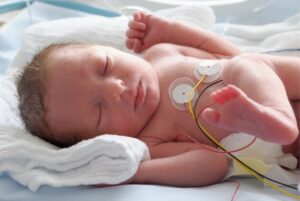
Lebanon’s public hospitals are the last safety net for mothers and newborns who have nothing. They don’t choose to come here. They come because there is no other option.
The prolonged economic crisis and ongoing conflicts in Lebanon have left a growing number of mothers, newborns, and children without access to essential healthcare. In response to this escalating humanitarian need, Assameh–Birth & Beyond has expanded its lifesaving medical support beyond Beirut to Tripoli and Saida, reaching even more vulnerable families.
Today, however, the resources that sustain these hospitals are rapidly diminishing. Continuous support is urgently needed; Not only to provide life-saving medical treatment for mothers and children, but also to strengthen healthcare systems through staff capacity building, specialized training, standardized clinical protocols, and improved patient safety and quality of care.
The gap between what is needed and what is available widens with each passing month. Behind that gap are real lives: mothers unable to afford safe maternity care, premature newborns fighting for survival in incubators, and children denied essential treatment simply because their families cannot pay.
Your donation is what stands between them and being left without care.
Your donation goes to
I am text block. Click edit button to change this text. Lorem ipsum dolor sit amet, consectetur adipiscing elit. Ut elit tellus, luctus nec ullamcorper mattis, pulvinar dapibus leo.

- Obstetric care: Midwives, medical supplies, and equipment for high-risk deliveries
-
Neonatal intensive care: Incubators and specialist care for premature and critically ill babies
- The Patient Fund : support covering hospital bills for premature babies, children and mothers who cannot afford it.
- Improve safety and quality care at the hospital.
“These mothers and babies arrive in the most fragile condition, often without family support. The hospital is their only safety net. And without continued funding, that net disappears.” Pr. Robert Sacy, Founder, ASSAMEH Birth & Beyond
Who we are caring for
Mothers
Women facing high-risk pregnancies, obstetric complications, and difficult deliveries who cannot afford private hospital care.
Newborns & children
Premature and critically ill babies, including abandoned newborns and children affected by neglect or abuse, in need of intensive neonatal care.
Every amount matters
ACT For Lebanon, a 501(c)(3) not-for-profit connecting American donors with vetted partners on the ground in Lebanon, has joined forces with ASSAMEH Birth & Beyond to make sure no mother or child is left without care. All donations are tax-deductible to the extent allowed by law.
A donation at this level covers the everyday medical supplies a patient encounters at nearly every visit: gloves, sterile dressings, syringes, antiseptics, and other single-use items. These are easy to overlook, but without them, care simply cannot happen safely. For a patient, this means every procedure — from a simple check-up to a more involved treatment — is done with clean, properly equipped hands, reducing the risk of infection and complications.
This tier keeps the facility itself, and the equipment inside it, safe and functional. It covers the upkeep of medical devices, repairs to essential infrastructure, and the calibration checks that keep diagnostic tools accurate. For patients, this translates directly into trust: a machine that’s properly maintained gives a correct diagnosis, and a facility that’s well-kept is one where care isn’t delayed or compromised by broken equipment.
This tier provides direct financial support for a patient’s hospital stay. It covers financial assistance for patients who can’t afford care on their own. Beyond the clinical side, this support relieves real emotional and financial stress — it means a patient doesn’t have to choose between getting treatment and covering basic needs, and a family isn’t left to carry that burden alone.
Larger donations go toward purchasing new medical equipment or upgrading outdated devices. This has a lasting impact: better equipment means faster, more accurate diagnoses and access to treatments that may not have been possible before. For patients, it can mean the difference between a delayed diagnosis and an early one.